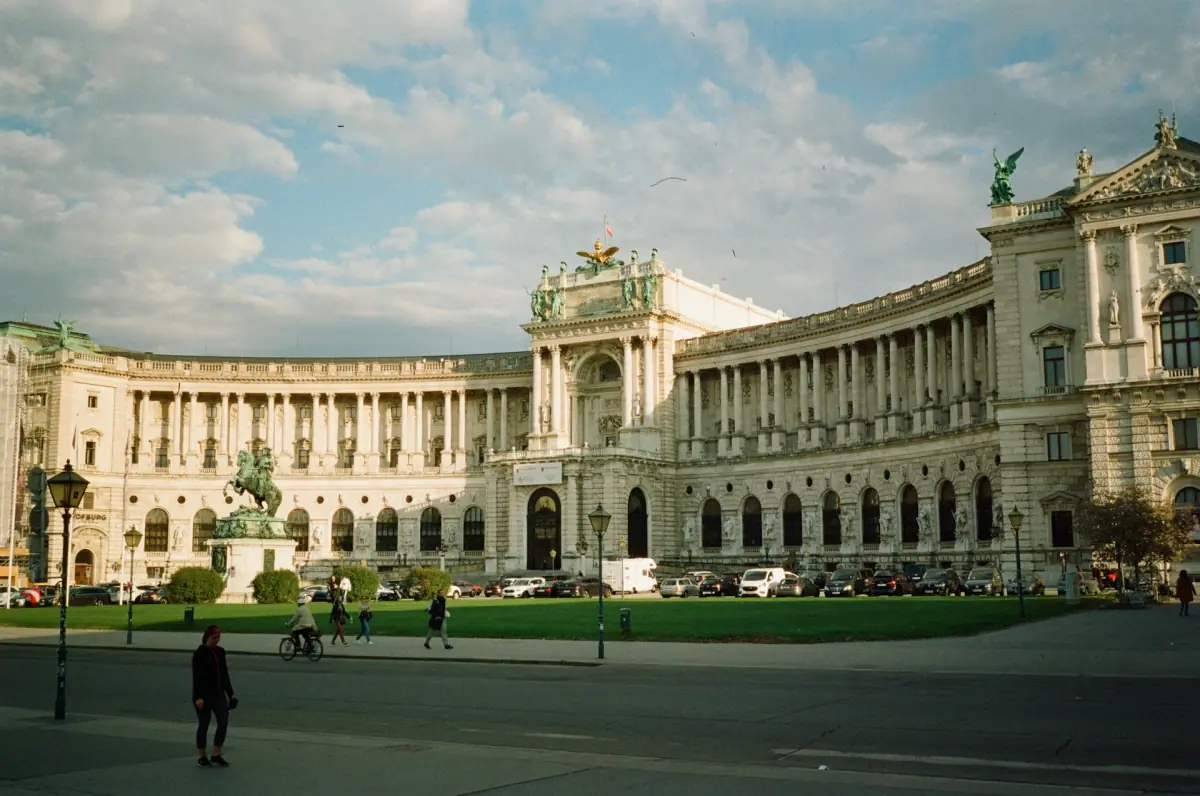
Vienna history from Vindobona to the city charter
Vienna history begins here with Vindobona, the Roman military camp established in the first century AD. The historic settlement grew south of the Danube where the Alps meet the Vienna Basin. Vienna’s city charter is documented in writing in 1221. These are two distinct moments in the story of a place that grew from a military site to a city with recorded civic rights.
Use St. Stephen’s Cathedral to orient yourself within the Innere Stadt, then make the Hofburg another stop on the same walk. The two landmarks give you a way to explore the historical core at street level before deciding which interiors or collections to visit separately.
Explore Vienna’s history
The certified guide’s walk suits visitors who want a guided introduction to the historic centre. Choose the coffeehouse-break walk for a pause, or the multimedia visit for an indoor experience.
Hand-picked tours, booked through Viator. Prices are indicative starting prices in euros (as of November 2026). Tap a tour for live availability and the current price in your currency.

Historic Vienna with a local guide
- Local certified tour guide
- Audio devices
- Vienna culture and traditions
The group uses audio devices to hear the guide; the monument meeting point does not include museum admission.
Check availability →
Vienna walk with coffeehouse break
- Vienna city map
- Coffee house break
- Group of 2 to 15
The shared walk includes a 30-minute coffeehouse break. Hotel pickup is available only on the private option.
Check availability →
Vienna history underground
- Admission to Time Travel Vienna
- 5D cinema and Virtual Reality
- English audioguide
The live-guided tour is in German; English is available by audioguide.
Check availability →Vienna history walks and multimedia visits
Pick a walk with audio devices to hear the guide in the street, a culture tour with a café break, or a show with narration and effects in underground vaults.
The Hofburg and Old Town architecture
The Hofburg is a starting point for looking at how Vienna’s historic buildings meet its streets and squares. Start around the Michaelerkuppel, where the Sisi Museum entrance is located, and give yourself time to look at the façades and the spaces in front of them. For an interior visit, use the palace and museum guide to match the entrance and ticket to the institution.
The 150-minute historic centre walk begins at the Maria Theresa monument and provides devices so the group can hear the guide. The 180-minute culture walk starts at Domgasse 5 in front of the Mozart House and Museum. The shared group has 2 to 15 people and the outing includes a city map and a 30-minute coffeehouse break. Allow for any café order separately. Hotel pickup is available only with the private option.
If you want a guided route through the streets, choose the historic centre walk with audio devices, while the culture walk suits visitors who want a café break in their itinerary. Meeting outside a building is a way to find the guide. Arrange any museum visit separately around the tour.

City expansion, districts and the Giant Ferris Wheel
Vienna began incorporating surrounding areas in 1850 and has had its current division into 23 districts since 1954. A practical way to see the difference between the historic core and later city boundaries is to visit both the Innere Stadt and the Prater in Leopoldstadt. The Giant Ferris Wheel was built in 1897. Find it at Riesenradplatz 1 and use the seasonal visitor calendar if you want to ride.
Vienna’s districts can also help connect the historical story to your itinerary. Landstraße gives you the Belvedere as a landmark beyond the Old Town, while the Prater gives you a destination in the second district. For a broader look around the city, compare the walking and cycling tours.
Vienna in the Republic and the changing city
Vienna became the capital of the Austrian Republic after the First World War. A housing shortage and municipal social programmes marked the years between the wars. That period adds a different set of questions to a walk organised around the old imperial centre, including how the city responded when housing became a municipal priority.
The 60-minute historical multimedia show offers an indoor introduction in historic underground vaults. It uses interactive scenes, effects, 5D cinema and virtual reality. Live guiding is in German, with audio in English and other languages. A guided walk gives you the street setting for the story, and the show gives you a way to fit a historical overview around another stop.
Questions about Vienna history visits
Where should I begin a self-guided history walk?
Begin in Vienna’s Innere Stadt, using St. Stephen’s Cathedral and the Hofburg as landmarks. Walk the streets between them before choosing an indoor visit. If the Hofburg is your main stop, use the transport guide to plan your route into the centre.
How long is the multimedia history visit?
60 minutes. The Vienna multimedia show runs in historic underground vaults, with live guiding in German and an audio guide in English, Spanish, French, Italian, Hungarian, Polish, Czech, Russian, Japanese or Chinese. The ticket covers the indoor show and its interactive stations.
How big is the shared culture walk group?
2 to 15 people. The Vienna culture walk starts in front of the Mozart House and Museum at Domgasse 5 and includes a city map and a 30-minute coffeehouse break. If you want hotel pickup, choose the private version of the tour.